What comes after semaglutide and tirzepatide?
The pipeline of obesity medications is deeper than it has ever been. Triple-agonist compounds that hit GLP-1, GIP, and glucagon receptors simultaneously are reporting placebo-adjusted weight loss in the 15–24% range — beyond what current FDA-approved options deliver. Here is what is in Phase II and III trials. Most people who read this are comparing weight loss injections options around Daytona Beach, FL, so what follows sticks to the details that change in practice.
| Medication Name | Target Receptor Pathways | Current Clinical Trial Phase | Reported Placebo-Adjusted Weight Loss | Unique Clinical Distinction | Source |
|---|---|---|---|---|---|
| Retatrutide | Triple GLP-1/GIP/Glucagon receptor agonist | Phase III | 24% | Simultaneous enhancement of energy expenditure and thermogenesis via triple receptor agonism and glucagon-mediated activation. | 2, Inferred, Wikipedia Non-Approved/Investigational Drug Database |
| Cagrilintide/semaglutide (CagriSema) | DACRA (Amylin analogue) and GLP-1 receptor agonist combination | Phase III | 15.6% - 20.4% | Synergistic dual-hormone approach targeting both satiety and gastric emptying pathways; combines a dual amylin and calcitonin receptor agonist with a GLP-1 agonist. | 2, Inferred, Wikipedia Non-Approved/Investigational Drug Database |
| Survodutide | Dual GLP-1/Glucagon receptor agonist | Phase III | 14.7% - 18.7% | Increases metabolic rate through direct glucagon-mediated hepatic stimulation; focuses on energy expenditure, liver health, and fibrosis reduction. | 2, Inferred, Wikipedia Non-Approved/Investigational Drug Database |
| VK | Dual GLP-1/GIP receptor agonist | Phase III | 13.1% - 14.7% | Optimized peptide delivery designed for rapid induction of weight loss and improved gastrointestinal tolerability compared to existing dual agonists. | 2, Inferred, Wikipedia Non-Approved/Investigational Drug Database |
| Bimagrumab | Myostatin inhibitor (Activin type II receptor ActRII antagonist) | Phase II | ~5% | Promotes loss of fat mass while actively preserving or increasing lean muscle mass by inhibiting myostatin signaling. | 2, Inferred, Wikipedia Non-Approved/Investigational Drug Database |
| UBT | Triple GLP-1/GIP/Glucagon receptor agonist | Phase II | 19.7% | Investigational triple-hormone-receptor candidate demonstrating high efficacy in technical biochemical target metrics. | |
| Cagrilintide | Dual amylin and calcitonin receptor agonist (DACRA) | Not in source | 7.8% | Acts on both amylin and calcitonin receptors to potentially reduce energy intake and increase energy expenditure. |
Why the triple agonists matter
Adding glucagon agonism targets energy expenditure directly — not just appetite — which is why the numbers climb past the dual-agonist plateau. Bimagrumab takes a different path entirely: a myostatin inhibitor that preserves muscle while dropping fat.
The short version
- Triple-agonist compounds hitting GLP-1, GIP, and glucagon receptors simultaneously report placebo-adjusted weight loss of 15 to 24 percent, beyond current FDA-approved options.
- Retatrutide, a Phase III triple agonist, shows the highest reported figure at 24 percent, driven by simultaneous energy expenditure and glucagon-mediated thermogenesis.
- CagriSema pairs a dual amylin and calcitonin receptor agonist with semaglutide in Phase III and is reported at 15.6 to 20.4 percent.
- Survodutide, a Phase III dual GLP-1 and glucagon agonist, is reported at 14.7 to 18.7 percent with a focus on energy expenditure, liver health, and fibrosis reduction.
- Bimagrumab, a Phase II myostatin inhibitor acting on the ActRII receptor, is reported at roughly 5 percent while preserving or increasing lean muscle mass.
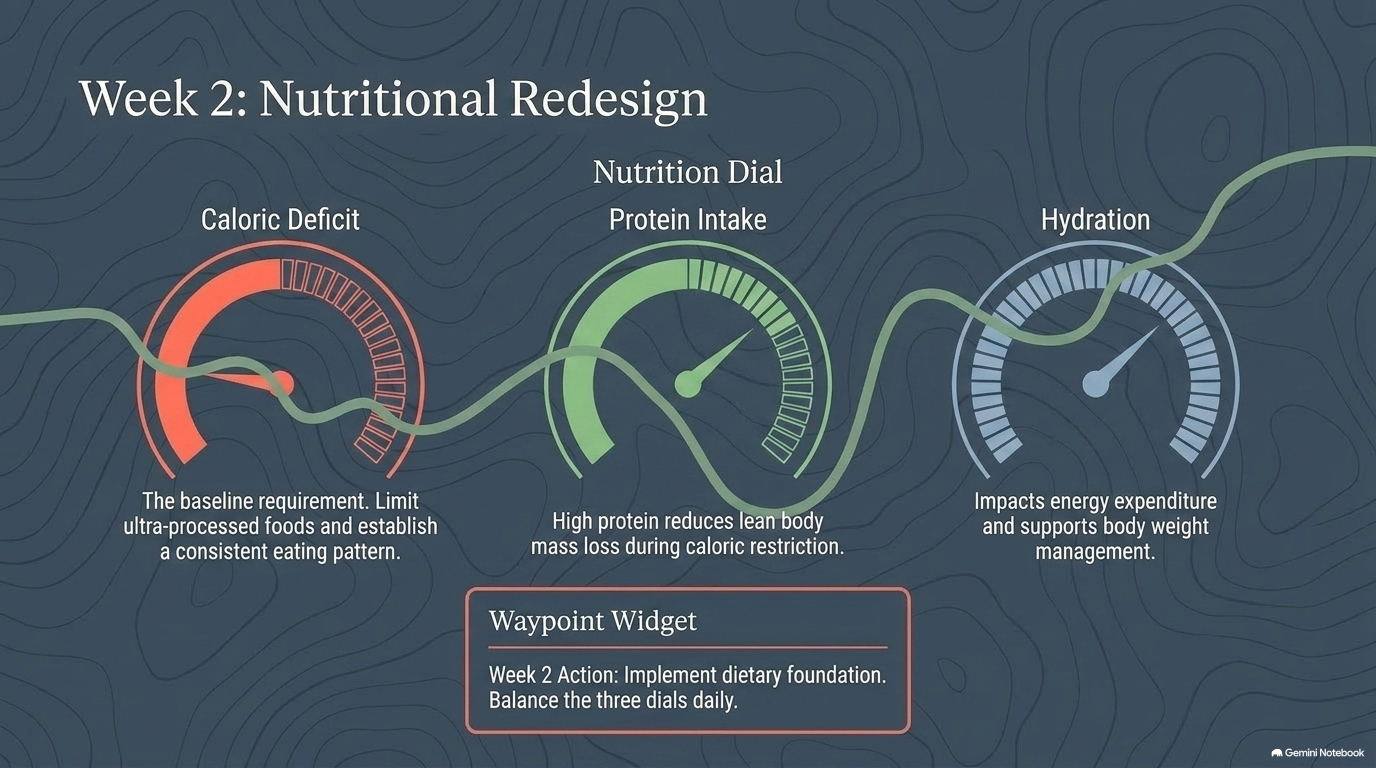
- Approved options already work and give the best results when combined with structured nutrition and follow-up, so patients need not wait for the pipeline.
What to do while you wait
You do not need to wait for the pipeline: approved options already work, and the best results come from pairing them with structured nutrition and follow-up. Get matched with a local provider who can discuss what is available today — and what the pipeline means for the future.