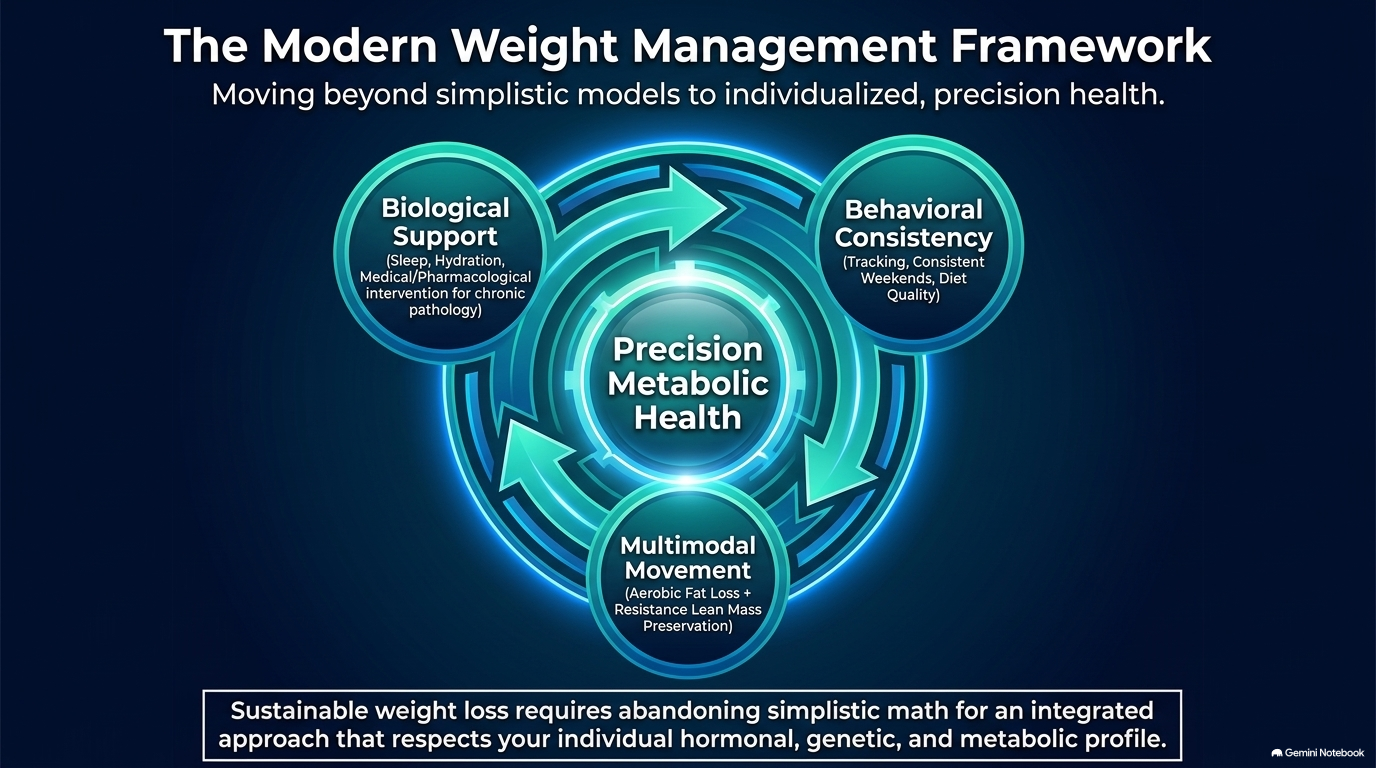
What do people who maintain weight loss actually do?
The National Weight Control Registry tracks thousands of people who lost significant weight and kept it off for a year or more. The behavioral markers that separate maintainers from regainers are remarkably consistent — and they are all learnable habits, not personality traits. If you are here looking into weight loss injections, the sections below walk through the process from the first quote to the finished job.
| Behavioral Marker | Registry Statistical Target | Clinical Practice Baseline | Metabolic / Hormonal Justification | Weekly Adherence Threshold | Source |
|---|---|---|---|---|---|
| Physical Activity | Average energy expenditure of 2,545 kcal/week for women and 3,293 kcal/week for men | ~1 hour/day of moderate exercise like walking; engage in enjoyable lifestyle activities (short bursts helpful) | Upregulates uncoupling protein 1 (UCP1) and increases muscle mass to elevate BMR. | 7 days per week (~60 minutes daily moderate-to-vigorous intensity physical activity) | NWCR Database Summary, User Description, 1, 2, 3, 4, 5 |
| Nutritional Density | Average daily intake of 1,381 to 1,800 kcal/day; fat limited to 24% of total calories | Low-fat, calorie-controlled diet focusing on whole, minimally processed, low-energy-density foods | Minimizes passive overeating in a calorie-dense environment; ultra-processing disrupts hormones (testosterone, FSH); sleep deprivation alters ghrelin/leptin. | 7 days per week consistent adherence to calorie and fat caps | NWCR Database Summary, User Description, 1, 2, 3, 6, 4, 7 |
| Meal Consistency | 78% eat breakfast daily; 59% maintain same eating patterns on weekends as weekdays | Routine meal timing (typically cereal and fruit); maintain identical schedule on weekends to avoid deviations | Weekend consistency makes dieters 1.5 times more likely to maintain weight; avoids disruption of circadian rhythms. | 7 days per week consistency (no weekend "cheat days") | NWCR Database Summary, User Description, 2, 3, 8 |
| Self-Monitoring | 44% weigh themselves daily; 31% weigh themselves weekly | Regular use of scale for biofeedback and cognitive restraint; use SMART goals to track progress | Allows immediate behavioral correction of minor slips; provides quick feedback and reinforces habits. | 1 to 7 times per week weighing; log foods ~3 times/day (20 times/month) | NWCR Database Summary, User Description, 1, 2, 3, 9 |
| Slips Correction | Correcting minor 1 to 2 kg fluctuations immediately | Rapid intervention protocol for any gain exceeding 1 to 2 kg; regular long-term follow-up with health care team | If weight gain exceeds this minor slip, only 11% of dieters successfully recover. | Immediate intervention upon detection of 1–2 kg gain | NWCR Database Summary, User Description, 2, 3, 7, 10 |
Why these habits beat willpower
Self-weighing, consistent activity, and structured meals work because they are routines — they remove the daily decision. Medical weight-loss programs build exactly these behaviors alongside medication, which is why the combination outperforms either alone.
The short version
- The registry target for physical activity is 2,545 kcal per week for women and 3,293 for men, about 60 minutes of moderate exercise daily, seven days a week.
- Nutritional density targets 1,381 to 1,800 kcal per day with fat at 24 percent of calories, justified by UCP1 upregulation and added muscle elevating BMR.
- Meal consistency shows 78 percent eating breakfast daily and 59 percent keeping the same weekend pattern, which makes dieters 1.5 times more likely to maintain.
- Self-monitoring runs 44 percent weighing daily and 31 percent weekly, with food logging about three times per day.
- Slip correction means intervening immediately at a 1-to-2 kg gain, because beyond that window only 11 percent of dieters successfully recover.
- These habits beat willpower because they are routines that remove the daily decision, which is why medication plus built behaviors outperforms either alone.
Build the habits with support
Get matched with a local weight-loss provider who can help you build these maintenance habits from day one — not after the weight comes back.